

Regulatory Frameworks at a Glance:
CE, GPSR, PPWR, EPR, ESPR & DPP
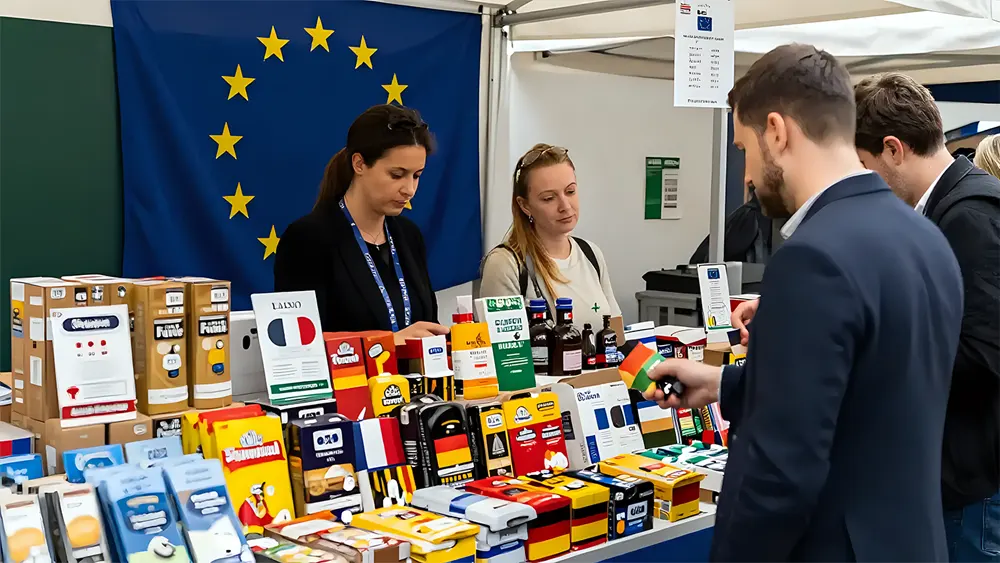
CE Marking — Product-Specific Safety Compliance
What is it?
CE marking is a mandatory conformity mark required for specific product groups within the European Economic Area (EEA). It certifies that a product meets all relevant European directives and regulations.
Who does it apply to?
Manufacturers, importers, and distributors of products that fall under specific CE directives.
Typical products affected:
Electronics, machinery, toys, radio equipment, and medical devices.
Why is it required?
To prove compliance with strict safety, health, and environmental protection standards.
When is it required?
Mandatory prior to placing the product on the EU market for the first time.
Core Requirements:
Technical documentation, risk assessment, EU Declaration of Conformity (DoC), and the physical CE mark affixed to the product.
GPSR (General Product Safety Regulation) — Safety Net for Product Compliance
What is it?
The GPSR (EU) 2023/988 is the new general product safety regulation for all non-food consumer products that do not fall under a specific CE directive.
Who does it apply to?
All economic operators offering consumer products in the EU – particularly importers, online retailers, and manufacturers.
Typical products affected:
Furniture, homeware, sporting goods, textiles, and general lifestyle products.
Why is it required?
To guarantee general product safety, ensure full traceability across the supply chain, and enable efficient market surveillance.
When is it required?
Mandatory for all new products placed on the European market since the regulation came into effect.
Core Requirements:
Risk assessment, product traceability, appointment of an EU Responsible Person, and strict documentation obligations.

PPWR (EU Packaging Regulation) — Regulation of Packaging
What is it?
The PPWR regulates all requirements surrounding packaging within the EU market – from design and recyclability to mandatory labeling.
Who does it apply to?
For manufacturers, importers, and distributors who place packaged goods in the EU market.
Typical areas affected:
Product packaging, shipping packaging, industrial transport packaging.
Why is it required?
Reduction of packaging waste and ensuring full recyclability across the market.
When is it required?
Gradual introduction with increasingly stricter legal requirements in the coming years.
Core Requirements:
Material specifications, recycling friendliness, proper labeling, and full technical documentation.
EPR (Extended Producer Responsibility) — Extended Producer Responsibility
What is it?
EPR legally obligates companies to take responsibility for the entire lifecycle of their products – particularly regarding proper disposal and recycling.
Who does it apply to?
For anyone who places products or packaging on the market in an EU member state for the first time.
Typical areas affected:
Packaging, electrical appliances, batteries, textiles (varies depending on the specific country).
Why is it required?
To finance and organize structured national take-back and recycling systems.
When is it required?
Already active in many EU countries, with strongly differing national regulations and mandatory registration duties.
Core Requirements:
Registration with national registers and data systems, regular and timely volume reporting, and the payment of licensing fees.
ESPR (Ecodesign for Sustainable Products Regulation) — Sustainability as a Duty
What is it?
The ESPR is a new EU regulation that defines ecological requirements for products across their entire lifecycle.
Who does it apply to?
For manufacturers and operators placing almost all physical products on the market (gradual expansion).
Typical products affected:
Electronics, textiles, furniture, construction products, and energy-related products.
Why is it required?
To improve product durability, reparability, energy efficiency, and the overall environmental footprint.
When is it required?
Gradual introduction via delegated acts for each specific product group.
Core Requirements:
Ecodesign criteria, comprehensive lifecycle assessments, and structured data provisioning.

DPP (Digital Product Passport) — Transparency through Product Data
What is it?
The Digital Product Passport is a central component of the ESPR and serves to digitally represent all relevant product information.
Who does it apply to?
For manufacturers and supply chain actors of specific product groups (depending on ESPR Delegated Acts).
Typical products affected:
Batteries, electronics, textiles, construction products (gradual expansion).
Why is it required?
Transparency regarding materials, origin, reparability, and recyclability.
When is it required?
Gradual introduction within the framework of the ESPR.
Core Requirements:
Structured datasets, permanent digital availability, and seamless integration into supply chain processes.
Conclusion: Why the Differentiation is Critical
CE, GPSR, PPWR, EPR, ESPR, and DPP are not isolated frameworks; they interconnect seamlessly. While CE and GPSR ensure fundamental product safety, PPWR and EPR extend responsibility to packaging and disposal. ESPR and DPP take it a step further, transforming the market toward data-driven, sustainable product accountability.
Companies that understand these relationships early and implement them in a structured manner secure not only regulatory compliance but also a sustainable competitive advantage in the European market.
Systemic Standards supports you in not only meeting these requirements but integrating them strategically into your business processes.